The detriment is not that we cannot see. It is that we only see what we want to see. I didn’t see the sign. Or maybe I chose to ignore it because (I thought) I knew the room so well. Ignorance is often more damning than it is a blessing. I didn’t see the sign. Leaned against where I shouldn’t have. Full weight against what would not move for me, all gathered in my palm. The wet expanse surrendered to my hand. Stark prints stared back at me when I pulled away, the very evidence of my existence, accented by the original hue of the walls begging for a final crumb of attention. I saw, then, the ugly underbelly of the wall. No wonder a paint job was ordered.
Paint lives between what is permanent and temporary. It crawls into the shallow creases of my palm and the crevices of my nails. At first glance, it seems I will be marked as a cautionary tale for all to see, but I know with enough scrubbing and unjustified disdain, this color will one day return to the world.
I tilt my head at my palm, like a patient trying to decipher an ink blot in a therapist’s office, a child observing an insect she has just discovered, a tasseomancer trying to read the bottom of an emptied tea cup. The fate of the doomed: One who spells decay and ruin to everything she touches. Oh, how terrible of an answer! How cruel I am to myself!
The fault, it seems, is unbearably and unavoidably mine to caress. After all, when someone has explicitly spelled out the situation and you choose to believe otherwise or feign nescience, who else is there to impute? There is no one else standing in the living room with me. The blame, like dust motes, has to fall somewhere eventually. I am conveniently located, am I not?
Never mind that. There is no space in this living room to wallow in self awareness (or is it pity?) that cannot be translated into realistic action. The wall unmovingly demands a remedy, yet there are no tools in the vicinity. I hastily grab the paints and brush of an artist and get to work, the tool foreign in my grip, like a small woollen animal whose fur I had dipped in glue. I put brush to wall and start what can barely constitute a repair. In tiny strokes, as if gentleness could help, I smooth the damage back into the wall. But, sometimes, gentleness begets further ruin. I was dealing with something I had no business dealing with. Attending to a bullet hole with a band-aid. The brush drags out the wet paint and leaves a ridge in the middle. Again and again, my sincerest efforts futile. The humiliation never stems from the act of committing the mistake. It is the amendment.
In my despair at a growing problem, I wave the white flag, clear my schedule, and go out of my way to purchase the proper equipment. My sojourn at the hardware store found me vacillating between cursing the gods for this inconvenience and recognizing that I have landed in this predicament by my own hand. I gaze blankly at the swatches only to realize I have no clue which shade would match the unmarred sections of the wall. I end up using the paint on my own hand for reference, unsure if the accuracy holds.
I finish the job back in the living room in record timing and stand far enough that, if I fall in every direction, I still would not touch the walls. I look at my masterpiece. Pristine. Untouched. I look at the sign, the grand announcement in all its capitalized glory. I wish to paint over it as well, subject others to the same fate as mine, only worse. I temper my thoughts. I wonder, instead, why something so messy had taken place in someplace as safe and familiar as the living room, where throw pillows and blankets ward off unease and troubles. Then, I find myself wondering if I had commissioned the painting of the walls in the first place. Then, I find myself questioning whether it was I who had put up the sign.
I look around for an alibi only to be greeted by the sharp chemical brightness that chokes me at the back of my nose. The wall mocks me despite my having restored it. It takes its sweet time to harden while releasing its last volatile traces into the room. I don’t have a choice but to inhale the wet paint into my lungs at the pace of a drip feed, a reminder of my doing. I open the windows to air the space but the scent lingers. No amount of wafting and praying would exorcise it. Should someone unleash their bloodhounds, they will sniff out the grave error I have committed.
The wall was wet for a reason. I didn’t command it to be so. I did not reverse what had dried with my touch. I had only put my hand where it would usually be safe. I touched it—that much is true—but just because my hand had been the culprit who disturbed the surface doesn’t mean I’m responsible for all the damage underneath. Ruins are allowed to precede me. The stain on my palm is more evidence than confession, I see it now. The blame fell on my head like a crown only because I had mistaken discovery for destruction. My only fault, then, was still reaching for the remedial brush.
In a few days, the smell would have subsided, the paint fully dried. But I’ll always know the damage I have done found, and no coats of paint will be able to hide this knowledge.
SUBSCRIBE TO BE NOTIFIED OF NEW WRITING
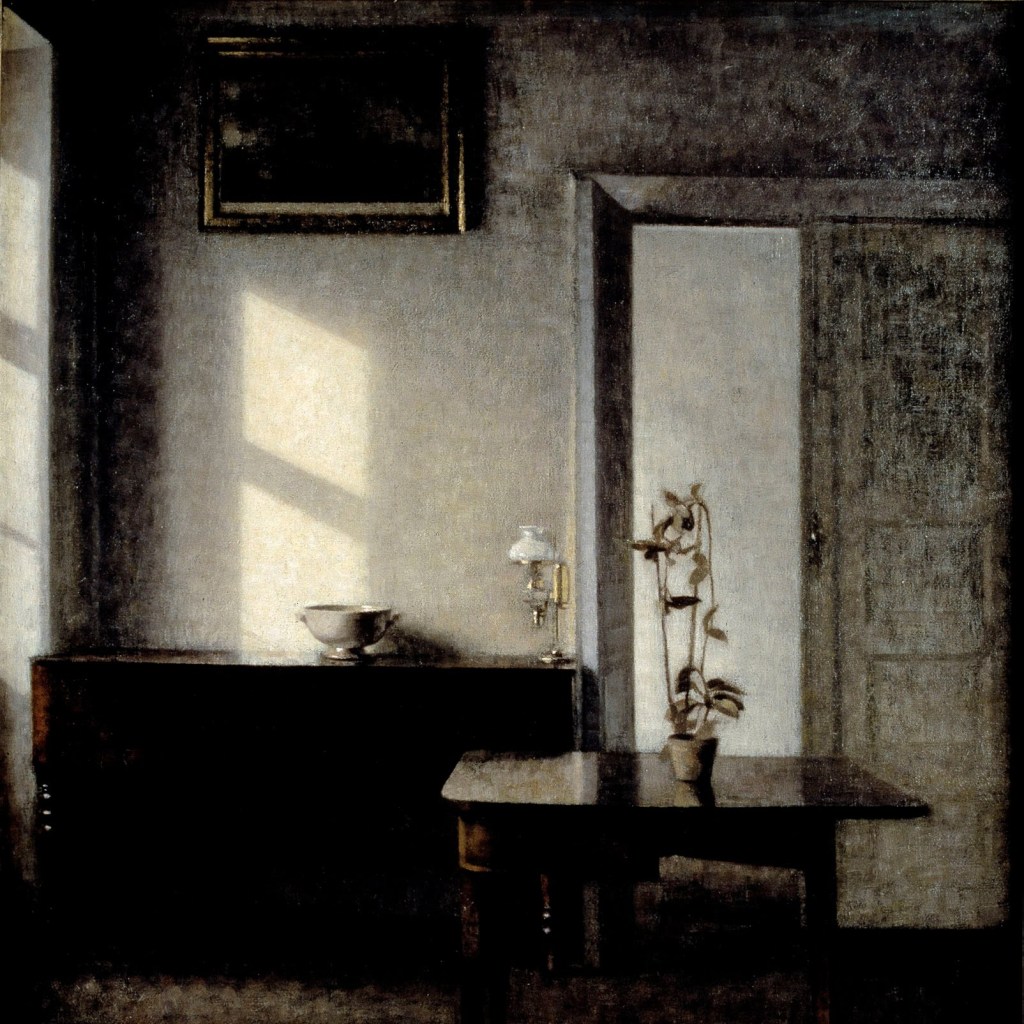
The accompanying image (Interior with potted plant on card table, Bredgade 25 by Vilhelm Hammershøi) serves only as a visual complement to the essay and carries no interpretive or illustrative claim beyond that.


Leave a Reply