Even a mad dog is still a dog. Barks like one, bites like one, wags its tail like one, comes home like one. Perhaps the distinction between a mad dog and a dog is that the former lives with more aggression, which is, arguably, simply more passion. The question is if you would be able to tell a mad dog apart from its counterpart. The question is if you would still extend your hand to a mad dog.
Even a mad dog still has a purpose. Going mad is not a purpose but a symptom. A purpose is something you can control; a symptom, you can’t. A mad dog’s purpose, if I may so posit, is to defend. The madness is a means of defense against those who have hurt it. When you bleed and nobody bats an eye, you have to learn to bite—it is the unwritten rule of survival. I’m mad because I let you do this to me. I’m mad because I let you do this to me and I still come home like a good dog does.
Even a mad dog was once a good dog. Can still be a good dog. The criteria of a good dog is one who barks, bites, wags its tail, and comes home, among other things (they don’t always have to turn tricks). A good dog nibbles the ball; a mad dog turns a nibble into a gnaw until the intestines of the ball are exposed. A good dog eats from its bowl; a mad dog licks the bowl clean until it can see its own reflection and then barks in shock because it no longer recognizes itself.
Does a mad dog know it’s mad? Can madness be self-diagnosed or does it have to be externally prescribed? Can it be prescribed by any external force or only by the person who turned the dog mad? Is madness inherited? Is it a virus the dog catches and can never shake off? Or has it always been dormant inside, waiting to be awakened? Is it seasonal? Conditional? Tamable? Curable? Can the madness be put down without disturbing the infected?
Even a mad dog will still respond to its name. Call it gently in the breeze. Call it vitriolically from the front porch. Talk about it behind its tail. Talk about it sorrowly. The mad dog will still recognize its own name, never mind the tone. After all, it is the sound that affirms its existence.
A silent dog is not an obedient dog. You would be cursed to make that mistake. A silent dog is one that has given up asking to be heard and spared. If a mad dog barks at you, do not think for a second that you should be afraid. In fact, the dog is madly barking because it is afraid of you. You, the enabler of fear and inflicter of hurt. Should you and the mad dog go to court, you who have the voice protected by god and patriarchy and coin will emerge victorious—this you do not need to worry about. What you need to worry about is when you later return to your picket-fenced, three-storey house and lock the door while the mad dog goes silent across the street. When you slip under your covers in your silk pyjamas and replay the hurt you have done. The guilt is slow and steady. A drip feed. Even if it never grows.
The dog across the street surrenders to the madness. Waits for someone with a better conscience to come along. But beware: Being chosen doesn’t mean you’re safe, dog. Being chosen doesn’t mean you’ll be asked to stay, mad dog.
I look at the mad dog at my feet, old and tired. A lifetime of running rampant trying to shake off the blames and guilt that have other people’s names on it.
Is it at all plausible that there is a mad dog inside all of us, waiting to be roused from sleep? We must all learn to bark and bite at some point, learn the distinction between the two. Some hands that feed are meant to be bitten: The hands laced with poison, the hands attempting to extract your blood. Then, sink your teeth into what does not serve you and watch the life fall out of it. All ill intent and sinew. The owner of the hand will scream bloody murder and wag their finger in front of your snout. You will have the urgency to bite that finger too, but exercise restraint.
The mad dog at my feet doesn’t move much anymore. This canine creature has started churning the madness into resentment a while ago, all by its lonesome, all in its silence.
It is true that I am a resentful person. Easily provoked, effortlessly shaken. I apologize to the space between my brows which I so often squeeze, the inside of my palms that have been marred by fingernails. But I did not choose the madness that preceded this resentment. I defended myself until the madness consumed me, and I tried to be brave in its consumption, I did.
I think I have more stages of grief than most. I think the plurality of this madness takes up a couple of those stages before thickening into resentment. Well, how else am I supposed to react to what broke me in ways I could not even begin to explain? I wade in murky waters for magnetic alphabets, trying to make sense of it all, but perhaps there are some people we cannot make sense of because we cannot ever fathom behaving like they do, bearing ill intentions like they do, orchestrating chaos like they do.
It is true that while we cannot control how others behave, we can control our actions. But there is a breaking point: Most wounds make you cry and a select few make you feral. And madness, it seems, is the only language pain knows how to speak. So I allow myself to be devastated, mad, and resentful. All in that order.
But I will not carry this resentment with me into the next life. This vow I make with bared fangs.
Easy now, mad dog. You have a forever home here. Don’t throw it away by responding to names that aren’t yours.
SUBSCRIBE TO BE NOTIFIED OF NEW WRITING
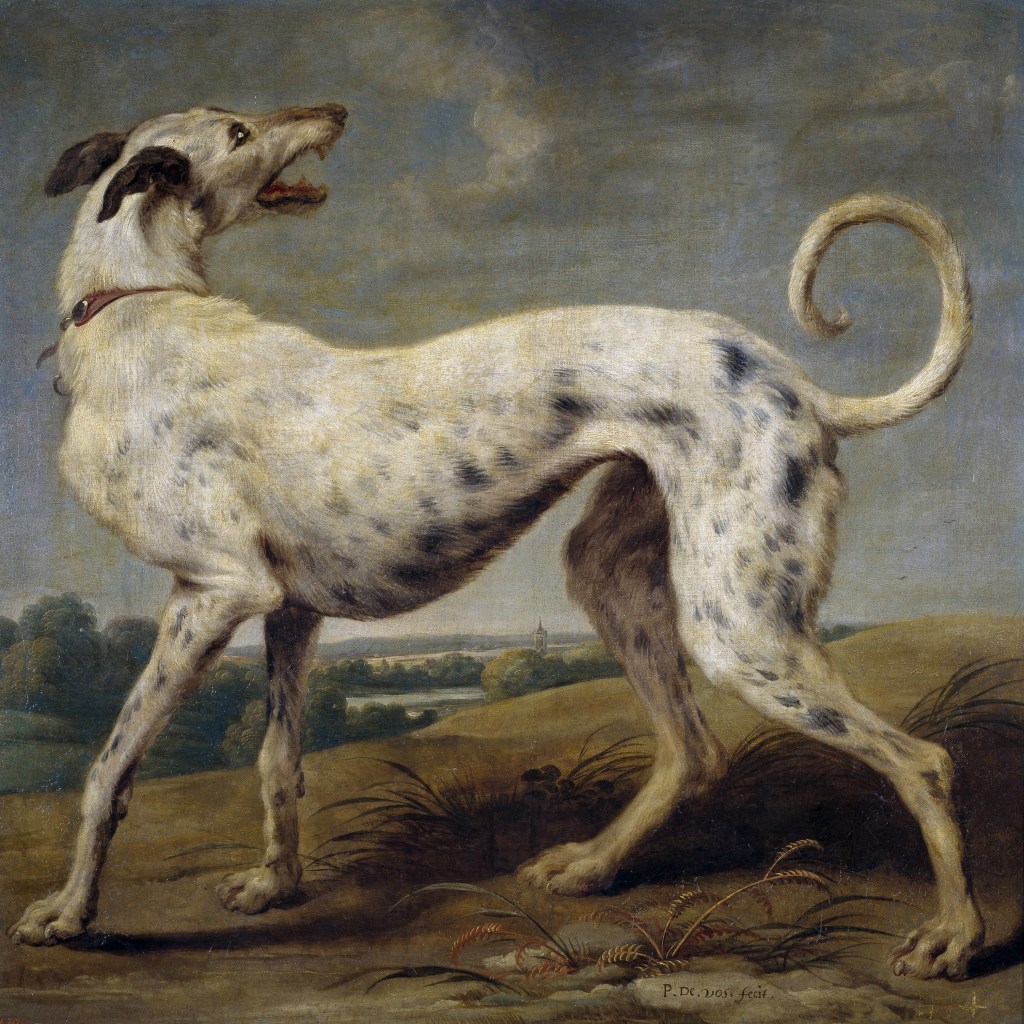
The accompanying image (A white greyhound by Paul de Vos) serves only as a visual complement to the essay and carries no interpretive or illustrative claim beyond that.


Leave a Reply