I reach for it like I used to reach for my mother’s embrace
Stand on the cliff like the woman who turns to stone waiting for her lover’s return
O bring me familiarity; let this space between us ooze with carelessness
I will disarm this stubbornness to be consumed by you
Come back to me in your fullest, fiercest form
Hear me—can you hear me?
Can you see how empty my palms are?
How dry my tongue has run?
Be o again my second skeleton
Hold me upright and groan under every movement
I loved you for being storm-fed and lightning-charred
Have you learned to survive out there without my love?
Have you learned to survive out there or have you flickered out of life?
Who am I without your ceaseless flame
that blazes this second and threatens to extinguish the next
This anger, no longer shaped like my clenched fist and phlegm of words
This wrath, cooled to freezing point
This rage, meditated and domesticated
This fury, no longer a blade I can reach for
This ire, sounding like a springtime bird song
Yes, yes, I am still looking to pick a fight
I grovel at the door of an old conversation
Giving myself better stage directions
Sharper lines
Come back! I am not done with you yet
Yes, yes, I was ready to bite into your pomegranate,
your lotus—
Yet you left without notice and I threw up
In my mouth
The acidity had to come out somehow
It used to be lip-searing, merciless
Now—pathetic!
This old world, senseless without you
Return at once so I can see things for what they are
This lace bow, shaped like a noose
This smile, shaped like a bent knife
This memory, shaped like a cage
This fallen leaf, shaped like a glass shard
I once prayed:
There has to be a language in which this anger cannot survive
愿沧海的潮声,熄了我掌心这簇不肯低头的火
Aku ini seperti bara yang malu menjadi abu
Même la terre brûlée finit par accepter la pluie
I now pray:
Flicker back to me in another language
In another life
SUBSCRIBE TO BE NOTIFIED OF NEW WRITING
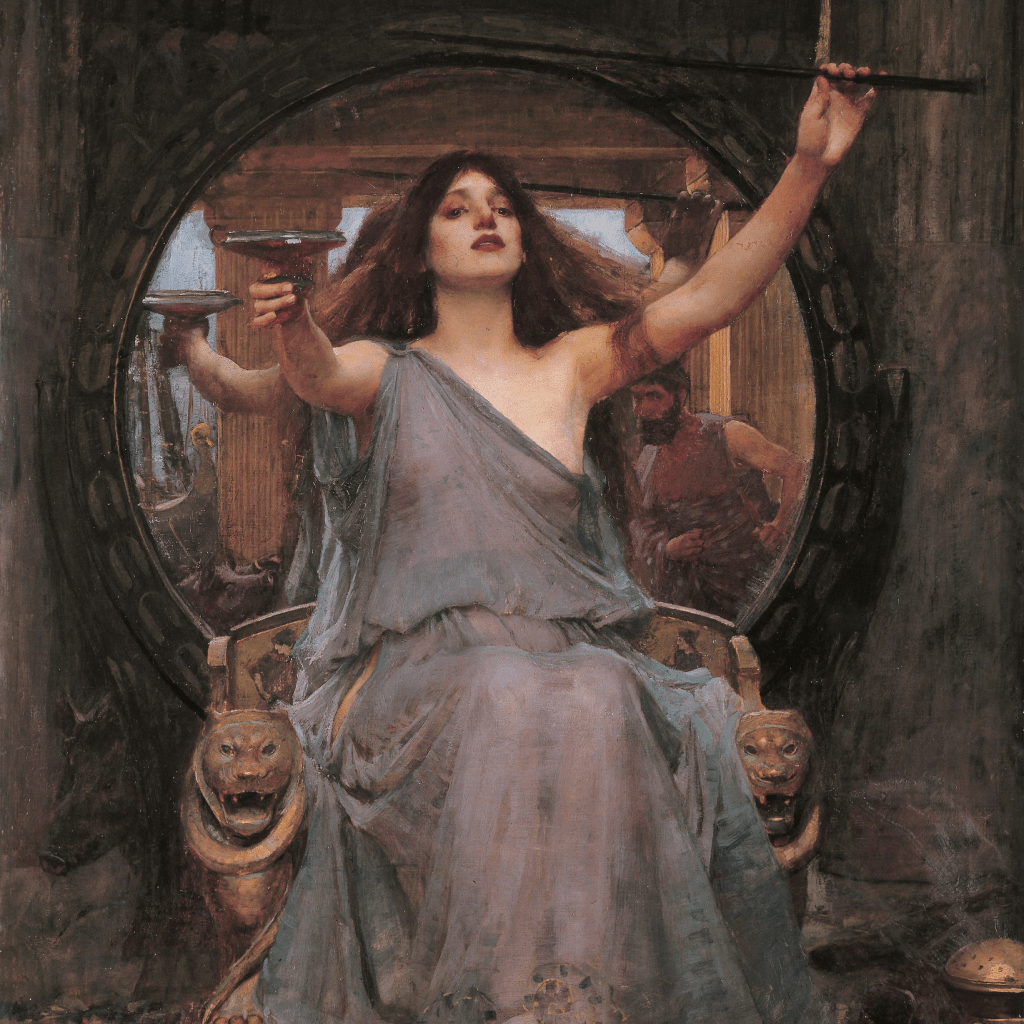
The accompanying image (Circe Offering the Cup to Odysseus by John William Waterhouse, 1871 – 1878) serves only as a visual complement to the essay and carries no interpretive or illustrative claim beyond that.


Leave a comment