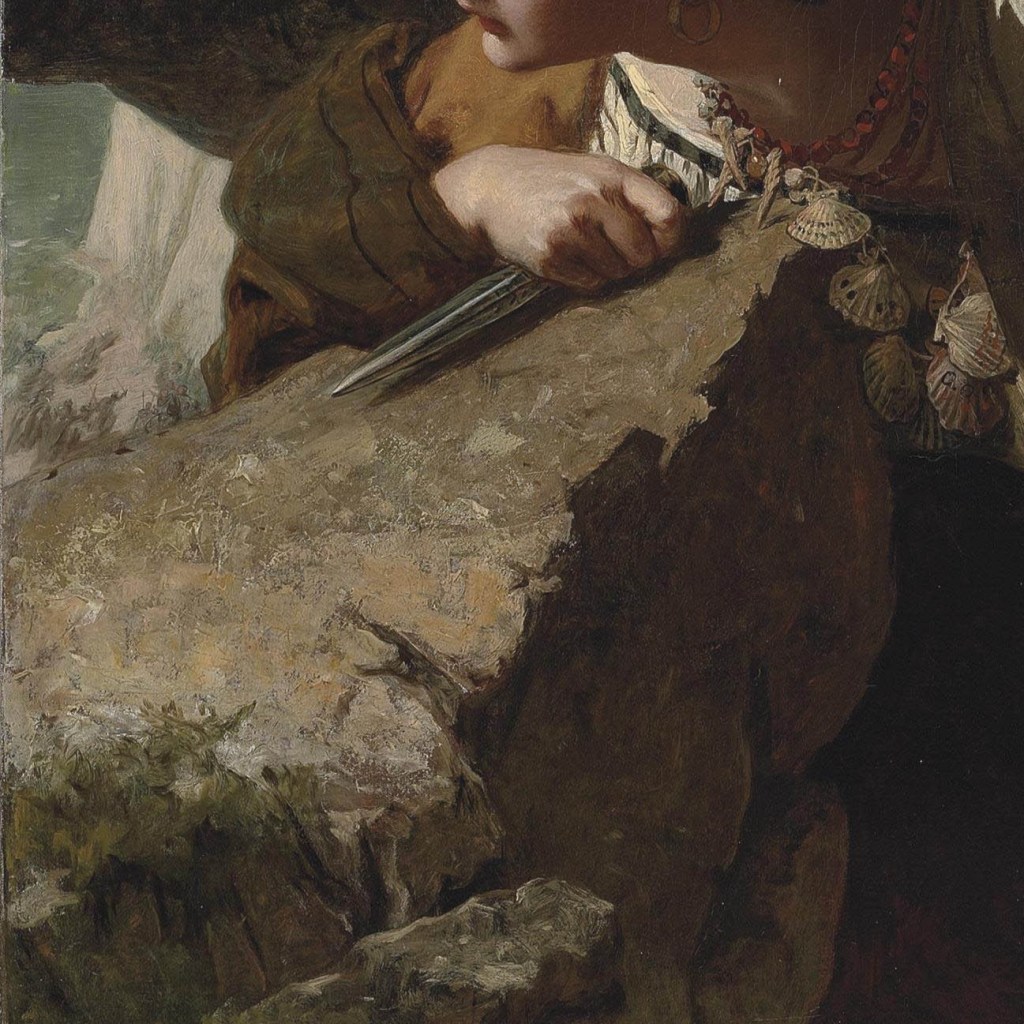
In and out like it’s second nature because it is. Most of the time, it’s in then out. A rhythm, a waltz, a habit. There are occasions where one lasts longer than the other. But sometimes, it’s just in. Like in the presence of a knife.
I don’t know when we learned to inhale around sharp things. To inhale sharply around sharp things. The body morphs into a student of damage, foresees extents of harm. Suddenly everything around you becomes a threat. Because the problem with being around something sharp like a knife is that you begin to look for other sharp things. You start to shape your body according to the edges of the tension. Eventually, it’s in and in and in, the out waiting for a turn that might never be granted.
I don’t know when I learned to mistake proximity for intimacy. If I want to be close to you, I must surely love you. And if I am always close to you, you must surely learn to love me back. If I stand long enough by the knife, it must surely dull itself on my patience. The first boy I ever loved taught me love was an endurance sport and so I trained like I’ve never won and ended up bleeding anyway. The blood was thick and the scab took forever to go away. I think some of it is still stuck under my fingernails.
Sharp isn’t always visible. Knives aren’t always metal. Sometimes it’s an inflection in a sentence. Sometimes it’s a word you’ve never used. Sometimes it’s a question loaded with an answer you won’t like. Sometimes it’s a misplaced comma in the beginning of a letter. Sometimes it’s radio static that stretches long enough for you to think your body parts are all in the wrong place. No matter what form the knife takes, we have learned one similarity—it is exceedingly brilliant at making things your fault. The blade never hated you, in fact, it was committed to you!
Your breath becoming shallow is something that goes unnoticed easily. So you get used to it. A rhythm, a waltz, a habit. Then, you are editing your laughs and hedging your needs. Swallowing whole phrases so they don’t leave your lips and fling a cut at someone else. Speaking with only half the vocabulary you were taught—the polite half. Do you hear that? You are calling it kindness and maturity as your body quivers in protest. The knife calls it an open road to being stepped on.
I don’t know if we’ll learn that the body can’t lie like we do to ourselves. It remembers every time you chose survival over expression. The palms are indented with fingernails. The teeth are no stranger to gritting. The lungs know when they’re being shorted. The body doesn’t understand excuses, it understands pressure. It understands when something sharp is hovering too close to the ribs. It doesn’t mistake tension for devotion.
Isn’t it easy, though? To live by more knife, less breath when you see pain as the admission price. Aren’t you so lucky to be standing in the glory of anything sharp at all? In a world so dull? Aren’t you the knife’s chosen one?
But you still flinch when nothing is raised. Wait for an angry entrance succeeding the slam of a door. Brace for a lash that won’t arrive. Anticipate the burn of a fire that will never be rekindled.
Knock. Knock. Hello? It’s me. You can put the knife down now. Nobody needs to know it was held against you in the first place. Nobody needs to know you were holding it too. Nobody needs to know you are putting it down now. No need for speeches or tears or dramatic exits. Just breathe radically. Unraise your shoulders. Unclench your fists. Trust that the air will meet you halfway. You will miss the sharpness, this I know, but you don’t have to bleed for access. What is meant for you already knows your name, it doesn’t have to take what is in your veins. Take up space without apologizing for the physics of it. This air is yours to take, no returns required. In and out. In then out. That’s it. That’s all. That’s all there is to it.
It doesn’t have to cut you to be real.
SUBSCRIBE TO BE NOTIFIED OF NEW WRITING
The accompanying image (Courage, Anxiety and Despair: Watching the Battle by James Sant, 1850) serves only as a visual complement to the essay and carries no interpretive or illustrative claim beyond that.

 Allison's Archives
Leave a comment