a short story (of a long history)
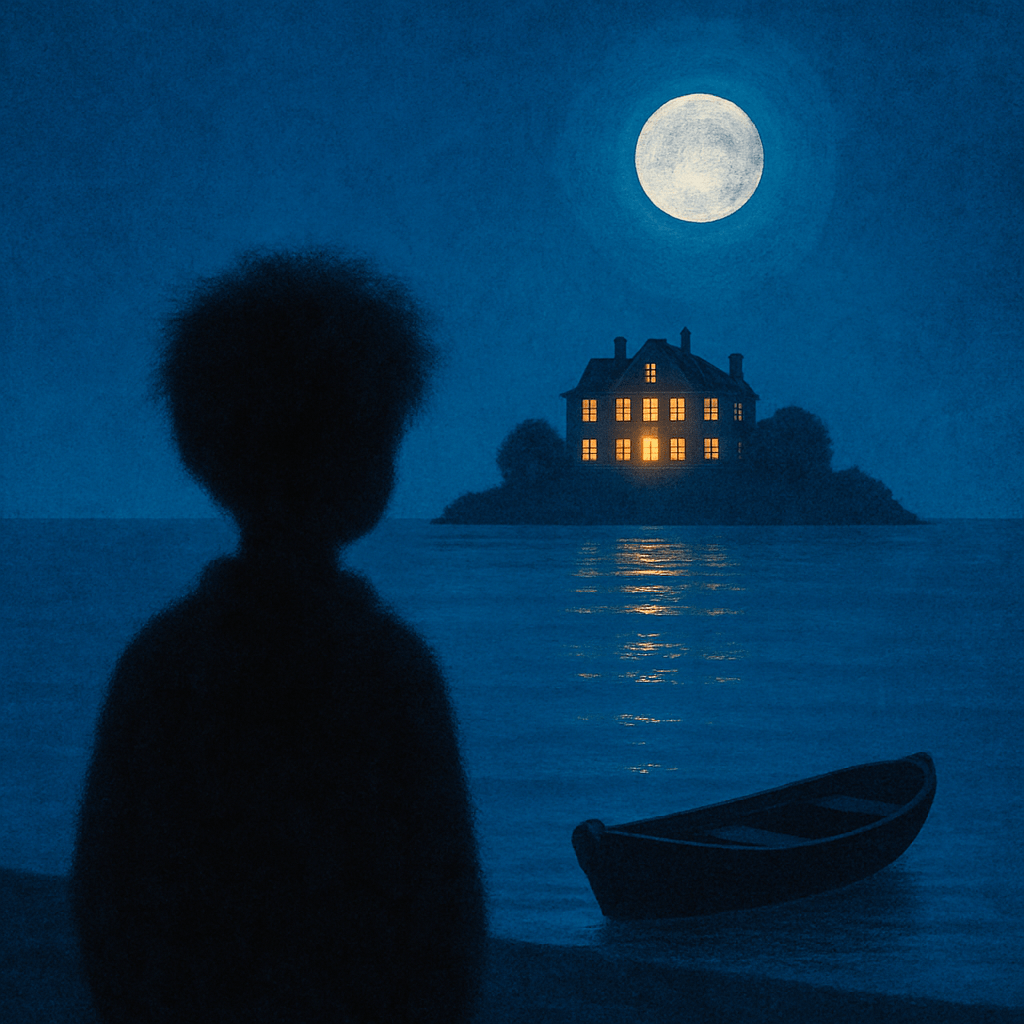
Boy was merely a babe when the strange man who looked nothing like him or his mother or his father or his sisters arrived on the shores of their hometown and offered up his unsolicited expertise and changes. The man spoke of a better tomorrow and flaunted around words that Boy was unfamiliar with like revolutionize, civilization, modernization, and empire.
The man and those who trailed behind him knocked from neighbor to neighbor with a big smile that momentarily ceased between doors. He wiped the bottom of his shined boots on their doormats as if he would not be stepping on soil soon again, as if he did not choose his own footwear while deciding to intrude on someone else’s land. When a tired father or busy mother would unlatch their locks, the man would sing praises of an estate he managed, and impose his ways of management on the confused families. Should any family resist his changes, the smile would wane from his face and the consequences that followed—well, the horror of it was something words cannot do justice to.
The man left not long after, though his bootprints remained in their soil. Boy grew with an unyielding curiosity to see for himself the very estate the man had spoken so highly of. How great could it be that the man was compelled to cross oceans and spread the word? To exact such arrogance and negate somebody else’s traditions?
When Boy finally saved up enough to follow the man’s return path, he found himself before a mansion beyond his wildest imagination—a roof that would withstand weathers to come, an entrance flanked by ivory columns that asserted a borrowed sense of civility and permanence, and an ever-expanding wing on either side of the manor. This was no mere house. It was a mausoleum of empire, opulent in its guilt. His taking in of the mansion was rudely interrupted by an interaction taking place at the gates. The man whose face was familiar to Boy handed a wad of cash over to a contractor, “Yes, fix the electrified barbed wire atop the gates. And behind.”
Confusion floated to the forefront of the contractor’s face, “Behind? But how will people come in?”
“That’s precisely it! We don’t want anybody coming in!”
Feeling unjust but not being able to part with the lucrative payment, the contractor agreed to the job but made clear that it could take a while to complete. It was then that the man noticed Boy and straightened his focus on him.
“Yes?”
“Uh… I’m here to see your mansion. You came to my home a while ago and boasted about how greatly you manage your mansion, and I’d like to see it with my own eyes. If it’s truly as good as you claim, I might even want to stay.” Boy’s voice wavered in the face of authority, his accent slipping in and out of his throat.
“Why, of course.” The man said and unbolted the gate.
“What was that earlier about wires?” Boy inquired.
“Nothing of your concern, dear child, now come along—dinner’s almost set.”
The man led Boy through the gilded doorways and winding halls to finally arrive at a meticulously arranged dining room. Boy was overwhelmed by the number of objects that adorned the place, yet could sense that something wasn’t quite satisfying about the interior; it’s almost as if every decor and furniture had been nicked from different homes only to be forced together in an out-of-tune medley of diversity and color. Boy took steps toward the long table that claimed the centre of the room, noticing that it was unstable and tips at the farther end. The only seat left was on the other side of the room, and it seemed the chair was missing a leg. Boy thought of saying something but remembered his mother’s lesson about being a good guest.
Just as Boy attempted to set his bags down and take his seat, the man appeared at his side and asked, “Before you sit, uh, what have you brought to the table?”
“What do you mean?”
“What have you brought today to justify you taking up a space at this table, at this feast that my people have spent the whole day preparing for?”
“I wasn’t aware of that requirement… nobody told me about it.”
“Did you not read the terms and conditions posted at the gate before entering?”
“I didn’t see anythi— besides, you’re the one who asked us to believe in your revolutionary ways, so I came to see for myself. You want my belief, so why is it me who supposedly owes you something?”
Awkwardness took over the man’s face as he noticed his scuffle with Boy was gaining traction with his guests.
“Don’t make this difficult now… What’s that on your wrist? Lovely, shiny little thing.” The man raised his brow at Boy’s heirloom watch.
“This is my father’s.”
“I’ll take it then.” The man responded without a slither of feeling.
The stillness that engulfed the room reminded Boy of the pockets of early mornings back home before the town rooster would crow. He thought about how his father would have already left for work then just to put rice on the table, and how the watch was the only commercially valuable thing their family had. What was silence to the rest of the mansion was reluctance to Boy.
The man motioned toward the rest of the dinner guests, “You’re making everyone wait for dinner; it is simple, dear child: How badly do you want to stick around and see things for yourself?”
The stillness was punctured by the unlatching of the watch.
A helper came around Boy to remove a place card that indicated he was taking up a place meant for someone else. As swiftly as she went, the helper reappeared with a new place card simply labeled as “Other.” She then set Boy’s place with table salt, a wooden bowl, and uneven chopsticks, and Boy watched as the other guests went about merriment with fleur de sel, fine china, and silverware. Caught in a difficult situation, he merely listened in on the conversations that the guests were having—using “summer” as a verb and talking about bags that had human names like “Kelly”. It wasn’t before long when Boy realised that the feast was out of his reach, and he didn’t feel welcome enough to stand up and get his share. So he sat and salivated for their feast which seemingly went on for hours before anyone stopped reaching for the leftovers.
Finally, Boy summoned the courage to get up and walk towards the middle of the table, his wooden bowl in hand. But before his uneven chopsticks could even touch the flesh of the remainders, his utensils were swatted out of his hands.
“What do you think you’re doing?” The man yelped, his eyes fluttering to his guests as if hoping no one had witnessed the alleged faux pas.
“You invited me here to see your mansion and have dinner, yet you won’t let me have a smidge of food on my plate and my utensils are second-grade to what your other guests have. How is that fair?”
“Well, you see, you’re a guest. These,” the man gestured to everyone else sitting around the table, “are permanent tenants of my mansion. You are only here because of my generosity—don’t you forget that.” As if on cue, the tenants reached for the leftovers, stuffing themselves beyond comprehension, the evidence of the crime dripping from their lips.
“How dare you take what belongs to us! Do they not teach you manners where you come from?” One of the tenants even shrieked. That shriek lodged itself in Boy’s mind as he pulled the covers over him that night, in a bed that had neither his mother’s embroidery nor his sisters’ scent.
Throughout his stay at the mansion, he continued to wander through corridors and rooms to figure out what it is that makes the mansion so great—and he did, indeed, score a few points, but also made a few questionable observations. There were hours of the day when he hoped he could bring his family over to witness the same things he was seeing—art beyond their culture’s imagination, music unlike what their instruments can produce, alphabets that sounded different to theirs—but he knew from the temperament of the man that this would prove challenging. He hadn’t even a clue if he would be booted out the gate at any time and merely passes his days hoping nobody notices him—at least until he has gotten enough exposure to inform him of this land and its eccentricities.
Boy opted to spend mornings at the gate, watching the contractor put up the barbed wire. Instead of focusing on his original agenda of finding out why this operation had been authorized, he was often carried away by the interaction between the contractor and the many travelers who approached the gate. Some of them were alone, others with family, all of whom dragged their baggage only to be disappointed with the work that was in progress. When asked why, the contractor could provide only a perfunctory smile and an innocent shrug. Who could understand the decision-makers? All masquerading greed and prejudice as peace and equality. After all, when fingers are pointed, the one who has his on the trigger will emerge victorious.
The contractor would often direct his curiosity at the travelers instead, inquiring why they had made the laborious and stretching journey. They were like Boy—only he arrived opportunely prior to the barbed wires being fixed. Weariness and exhaustion smothered their faces, yet there was a dying spark of hope that would flash across their eyes now and then. They were only more than eager to sing the tale that had brought them here: Some came from lands that were so bleak there was nary a future to be built. A few from places where their lives weren’t their own to dictate. Others have slaved and saved to leave for a promised land whose praises were uplifted by the man’s fellow partners. There are those who believe they would learn more about the world outside their hometowns. Several have been forsaken by the brutal forces of nature. The contractor had heard it all, seen it all. But what could he do except the job he was hired to complete?
One never thinks that it would be more difficult to stay in a new place than to leave where you came from, especially after assimilating to timezones and tongues. After shortening your name for convenience’s sake and folding your traditions into 23kg luggage. And they will tell you it’s not personal, it’s about numbers and maintaining the balance—as if your presence tips a scale made scarce. After all, the mansion only has so many resources, can only host so many. They’re right in that it’s not personal—it’s political. It was political four hundred years ago and it still is political today.
Those who took doors off hinges should not be entitled to locks.
 Allison's Archives
Leave a comment