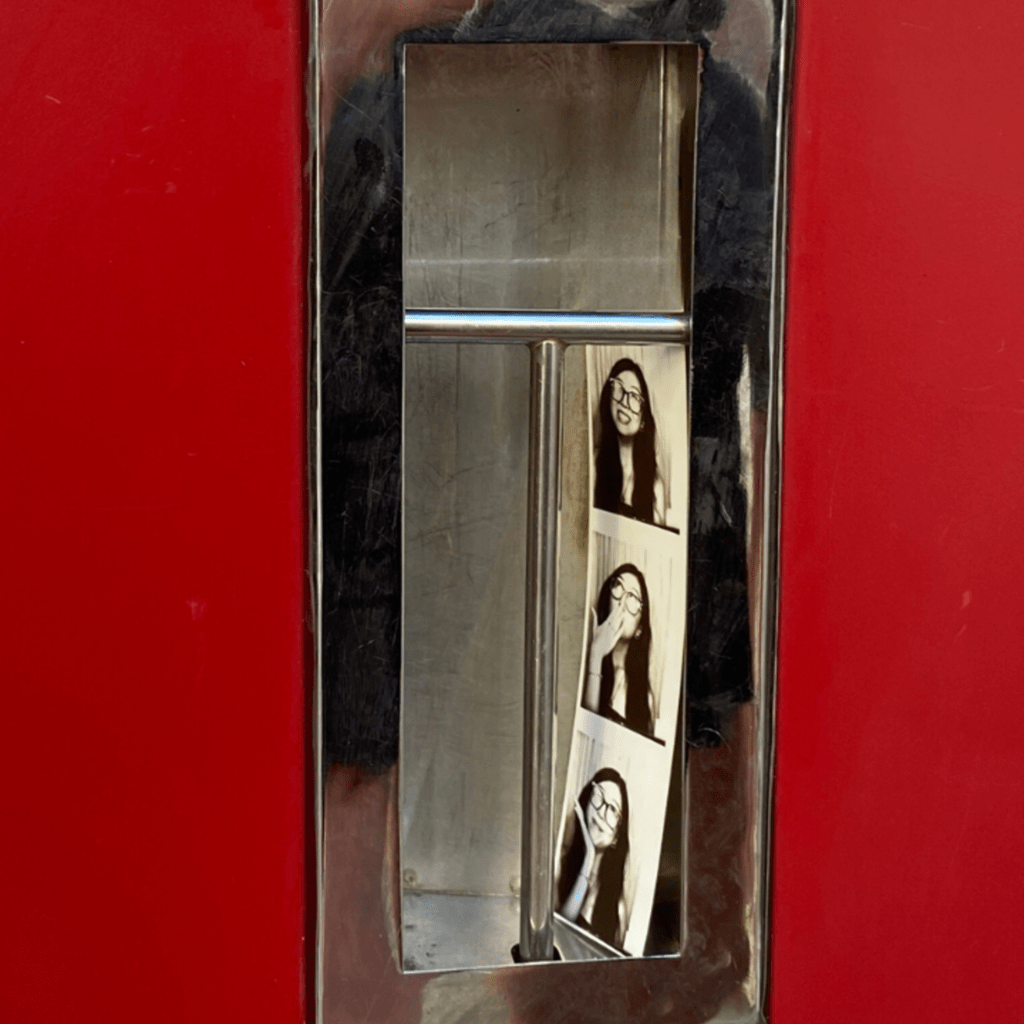
The sweltering heat is perhaps the primary thing I take from this holiday. The way the sun found me under gelato shop awnings, in ebbing gondolas, before sacred paintings, and within historic ruins to kiss my skin so I might remember this trip for the rest of my life. Italy, you sweet creature, how will I ever look at the world the same?
venezia
The Venetian airport was loud with queues longer than its canals, stretching endlessly as the line shuffled forward with weary patience. It was well past seven when I dragged my suitcase before the immigration officer and the crowd had just come down from a row when a group was given special treatment to the front of the line. Every Italian in the vicinity protested at a height of passion and I took this as a sign of one of two possibilities: That they take their queues as seriously as they take their food, or that the queue was holding them back from their serious food. The thought lightened up my mood as I shoved my passport into the deep end of my bag and headed for the shuttle bus to take me to the main island where my friends were already waiting.

The bus ride took longer than I had anticipated but allowed a curious glean into Venezia at large. The city, before it reached the water, was slightly more rural than bustling right away, with roads winding and reminiscent of my grandmother’s village through commercial buildings and quaint cul-de-sacs, car dealerships and gas stations. I constantly forget that European countries house more than their darling capitals and buzzword cities; there are normal people washing the dishes and doing the laundry, trees that grow in silence with or without the presence of tourists.
As the bus wheels ground to a halt every few minutes, I made note of the stop names. Language, which I have found to be ironically a quiet way to better understand cultures, seeped through to me like rivulets that eventually gave way to the waters surrounding Venezia. Where the French adore their e’s, Italians love their o’s—this much I’ve observed from a mere bus ride. My mind travels back to the airport queue once more, playing a mimicry of the voices I’ve heard but not understood. The Italian language, when spoken aloud, seemingly came with the prerequisite of being loud and passionate as if to declare one’s undying love for the world. Each word rolled off the tongue more like song than speech, infused with the kind of vibrancy that goes undetected unless you’re paying close attention. It appeared to me that in Italy, words were not just a communicative means—they were the very soul of emotion, lingering long after a conversation had ended.
But I digress. The bus flew across the waters that glimmered in the sunset, and the island soon came into view. Buildings of brown and orange tones grew prominent in the golden hour, and with every turn of the bus wheels, the scenes I was promised manifested before my eyes. I had to blink so to make sure it was not a dream; then again, I do not credit myself with the kind of imagination that would be capable of creating such a dreamscape.
The dinner after a two-hour flight, one-hour wait in immigration, and having to haul my suitcase over Venetian bridges was divine intervention. At Osteria Cicchetteria Venezia, I sat with my three high school friends and caught up heartily over bread, pasta, and white wine, falling just short of breaking a wine glass in all my excitement. I had not known taste buds to be capable of dancing until I had lifted that spoonful of lasagna into my mouth. It was at that moment I knew that this trip was going to put all my senses to the test.

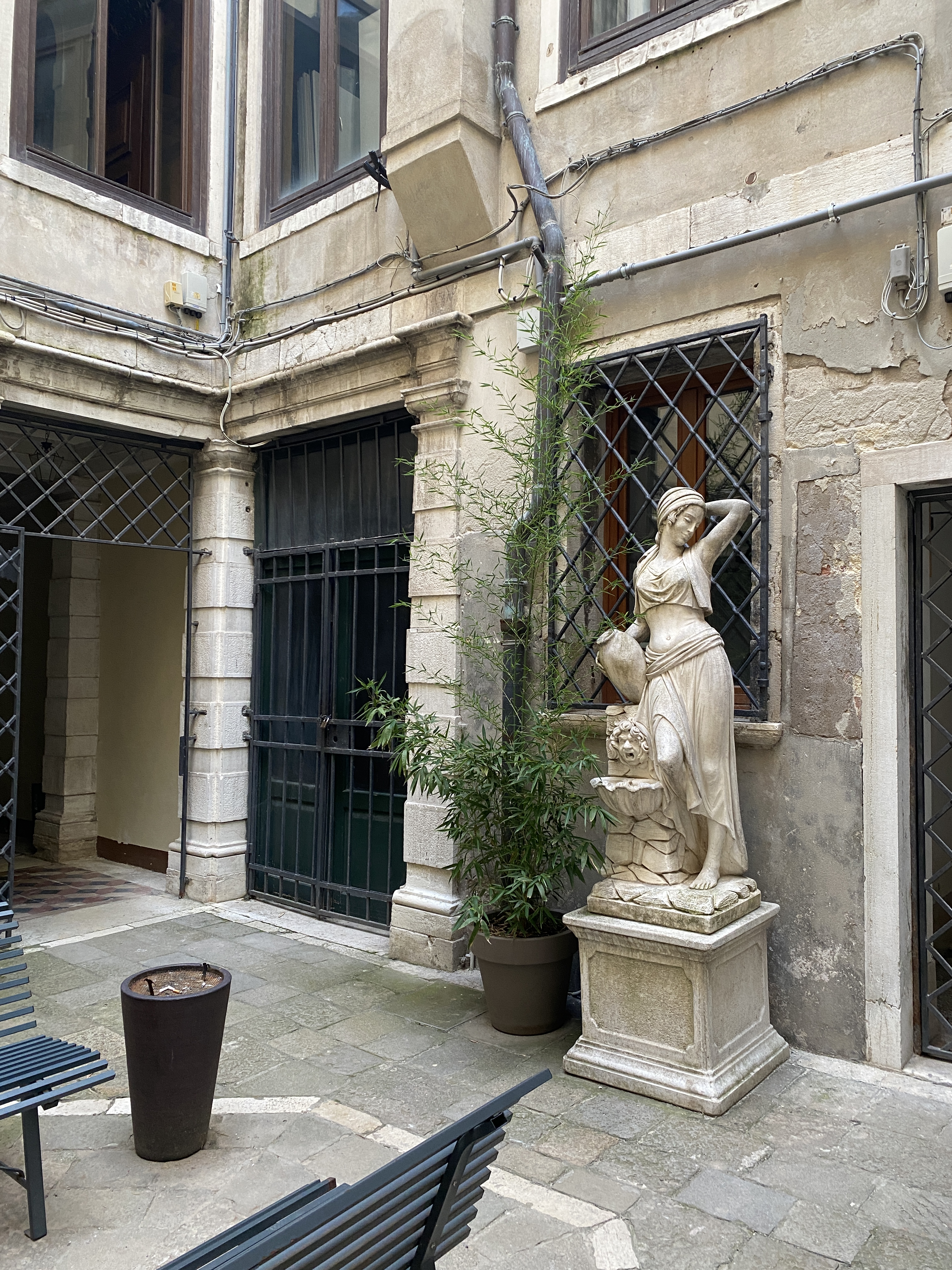
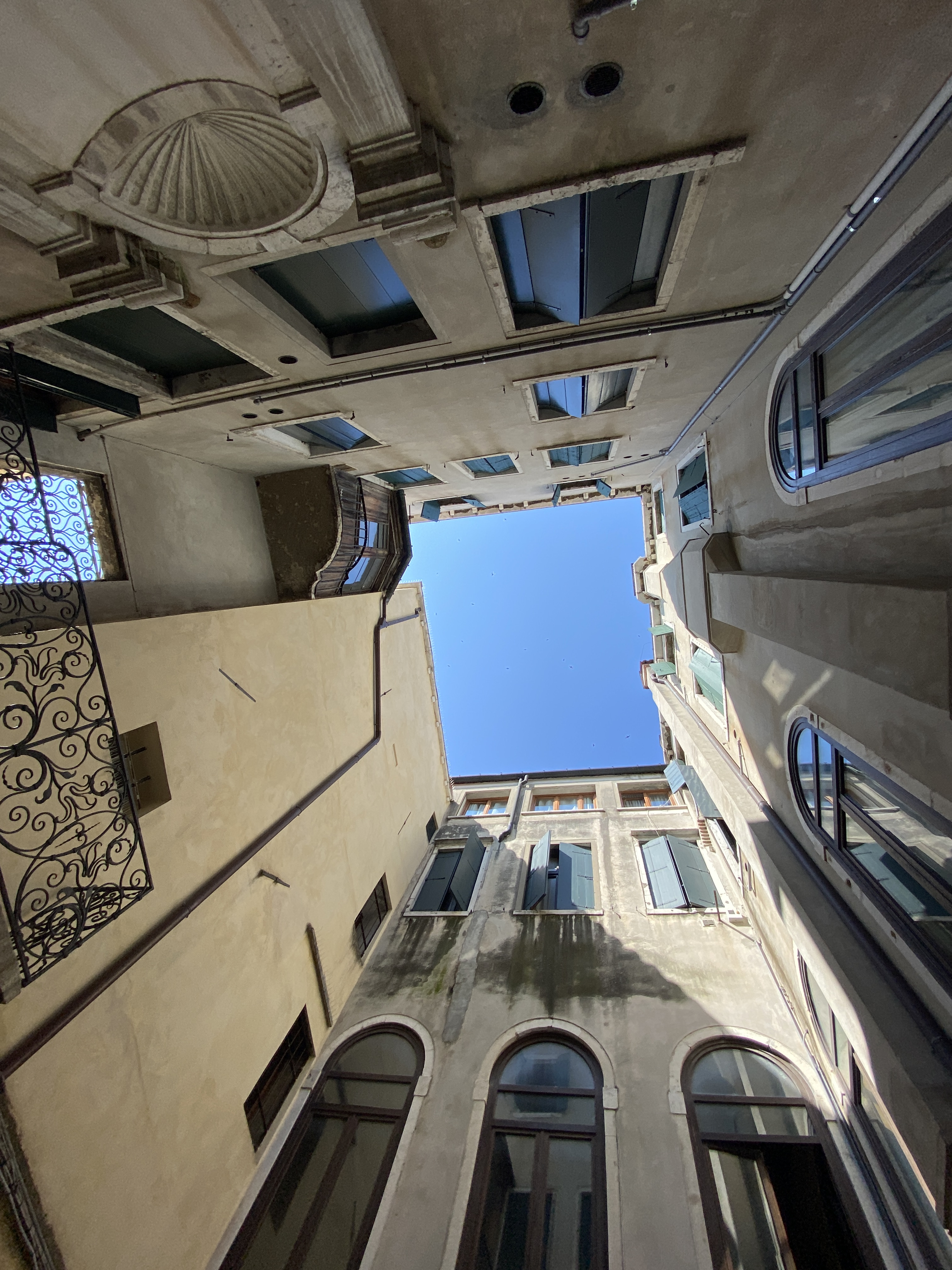
Our accommodation, on the inside, did not scream “Italia!” but the courtyard sure did. Three recycling bins introduced pops of color to the otherwise pale honey walls, but the focal point of it all was the park benches that looked well-worn, what with spots of rust and tear. I could imagine taking up space on one of the benches unashamedly, wine in left, cigarette in right, the locals complaining about the tourists who trudge suitcases through their beloved city after a long day of work. They exhaustedly conclude that tourists might be of some economic benefit nonetheless and ask each other if another pour of wine is necessary before bedtime. Then, they look up at the sky through the square created by the formation of buildings and smile at la luna.
This was yet another thing that piqued my interest: In Venezia where alleyways are constructed due to buildings—no taller than three stories to my observation, thank you very much—huddling up against each other like aunties gossiping at the salon, the sky is but a narrow azure strip, making it look like you could talk to God but he’d refuse to listen. If anything to boot, the outside world feels more inaccessible than ever, as if no land exists beyond Venezia.

There was much to appreciate when we wiggled through alleys and over bridges in the daylight, most of it coming back to me in fragments as I write this down. You know summer has arrived when you take a freshly scooped cone from the ice cream man at Suso and immediately a drop patters between the crevices of your fingers under the heat. Which was sweeter—the ice cream or the heat—I could not tell you.
We visited a jewelry shop positioned near the entrance to Piazza San Marco and had a lovely conversation with the shop owner which I won’t soon forget. The shop was a family business that found its roots 45 years ago and has since stayed within the bloodline. Its location meant that tourist footfalls were unceasing day in and day out—whether strategic or luck, only God knows. Venezia, you see, has a tendency to change every decade, but the shop Zvara has remained unmoving with its metals and diamonds. I suppose when something as concrete as those materials is fully formed, it is here to stay. The shopowner indulged in a proud accomplishment: While nearby designer stores have since been replaced by lesser-known brands, Zvara has stood the test of time and tides. Luckily for my friend who purchased a ring, he will also have a souvenir to stand the test of time.
After lunch, which consisted of a large portion of carbonara, the battering sun compelled me to pick up an iced soda from a street vendor before ducking in between buildings once more. This was when a maître d’ called out to me ever so respectfully, “Come in for a proper lunch, huh? Soda is not good for you.” I laughed in response, fascinated by the Italian straightforwardness.
We continued to explore the city without a rigid agenda, following the roads where they may lead us. I must not have dreamed it, but at some point, we coincidentally trailed behind a woman who whistled as she walked. I thought to myself then: Can you tell man from woman by whistle? After all, aren’t we just vessels for air, wanting to create something beautiful while we still breathe, no matter how transient? Can you tell man from bird by whistle?

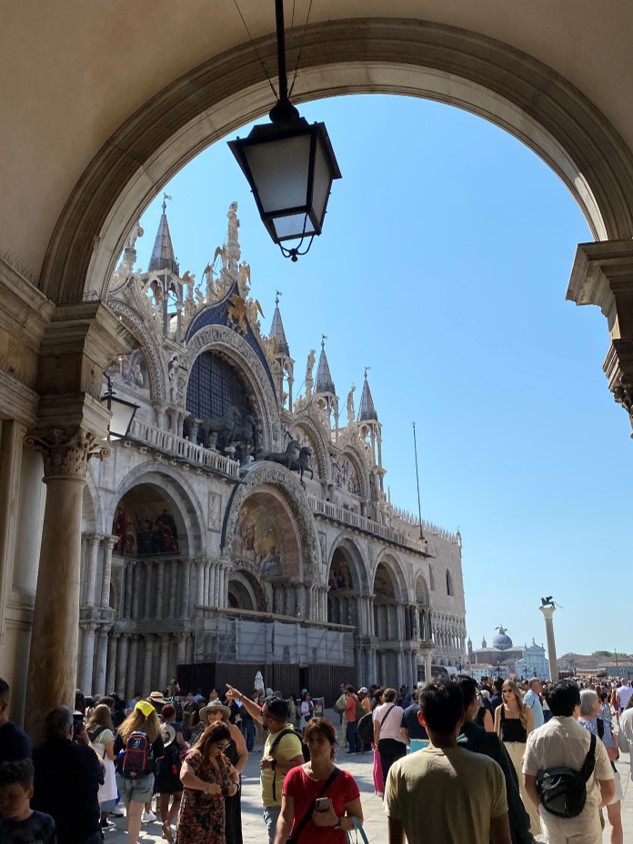


The gondola ride was a rite of passage when one visits Venezia, and so my friends and I happily indulged. It was undeniably a great way to see the city sans sore ankles by the end of the day, but if I were speaking candidly, it wasn’t quite worth the price tag.
As the curtains of night descended upon us, so began our hunt for dinner. Though the name of the restaurant had since slipped my mind, I can vouch for the seafood risotto that I devoured while being serenaded by buskers who sang a different song at every table. There was no sense of divide in Venezia—everyone treated everyone just the same. Post-dinner, we were in search of a bar for a cheeky little drink to celebrate our reunion—a task that took longer than it should have as we were distracted by cheers and shouts that grew louder down alleyways. Enticing. Curious. As it turns out, a soccer match was being broadcast in a bar that we decided wasn’t the environment we were looking for. But if there is one thing I have learned through my travels, it is that nothing unites people much like sports and music.
We settled on a bar called Retro, where a vinyl player and stacks of records sat prim and proper. I say we settled, but, really, the establishment exceeded all expectations. The setting was intimate, made more for hushed conversations than revelries. Beside us was a couple just reaching the bottom of their glasses. The lady said to her partner, “You know the woman who sat beside us at dinner? She called me ‘señora’! That has never happened before!” Her partner answered jovially and proceeded to ask if she was prepared for her accounting exam tomorrow. How wondrous, I thought, for us to have the capacity to gush over the smallest interactions, and to carry on living in the moment even if there might be more important things tomorrow.

I ordered ‘The Venetian Girl’ purely for its name. All I can recall is thinking that the drink tasted as if it were inspired by a classic Cosmopolitan and then some. The night went on as we sat, sequestered away from the rest of Venezia, exchanging stories over an intense game of bridge and a bowl of crisps, sipping away at our glasses as the clock ran on and the vinyl player rang out music that was created before any of us were born. When we had finally tired ourselves out, we brought our worn-out bodies back home—at this rate already familiar with the routes.
There was just one last thing that caught my eye before my body gave in: Employees just off their shifts near midnight, sitting carefree on the steps of Ponte di Rialto with a smoke and a slice. These Italians really understood what it meant to live.
firenze

A two-hour train departing from Venezia S. Lucia found us at Firenze Santa Maria Novella. The sky is accessible again in Firenze. A completely different scene compared to Venezia, as if the horizon had stretched itself out while I was on the train. In Firenze, the air felt lighter, the streets wider, and the meandering Arno reminds anyone that even if there is a great divide, bridges can be built. Outside the train station, buildings assume shades of white and tan, much brighter than their Venetian counterparts. In fact, the city is bright in every way imaginable—sounds, colors, smoke, and life.
Under the sun that grew increasingly unkind, we unloaded our bags into the homiest AirBnB before lacing up our shoes once more. With four entry tickets to the Uffizi Galleries and after entering hall after hall, we found ourselves before my favorite painting of all time—The Birth of Venus. Before the trip had commenced, I had told my friends that this was the one thing I had to witness in Firenze by hook or by crook. I couldn’t grasp how long I stood in front of the Botticellian piece, only that it was surreal for me to see the details up close rather than as pixels on a screen. It was not just that I was physically in Firenze or the Uffizi Galleries, but I was also in the painting itself, hearing the waves crash like a lullaby against the shore, feeling the breeze of Zephyr, and seeing the ethereal light that is cast around Venus herself. And I might have planted my feet there for eternity if the gallery did not have a closing time; truly, I might have never left Firenze to pick up a pen again. Alas, I left knowing that I would be back.
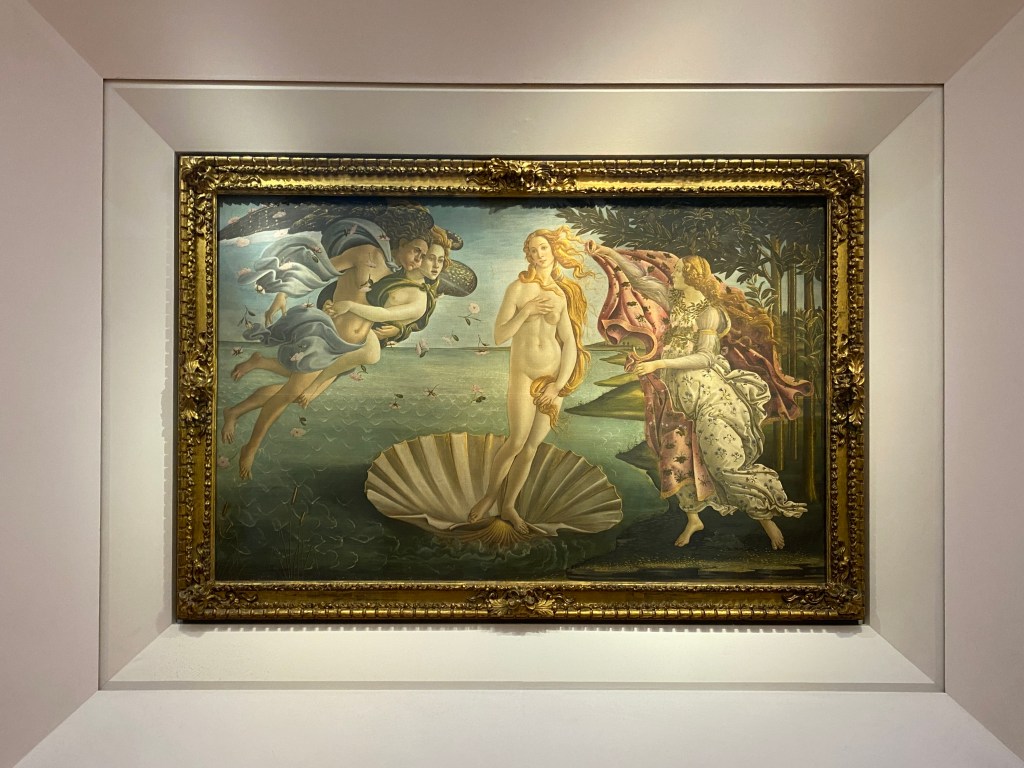
There was much else to appreciate along the galleries, only that we didn’t have much time. People ambled through the halls with cameras and sketchbooks in hand, whispering interpretations to their partners and friends. Firenze is known to house art pieces in perfectly maintained temperatures and cases, in museums and galleries unparalleled. Yet, we forget the brilliant art of the living. How beautiful is it?—the truth that we, moving and temporary, can appreciate if not create something unmoving and permanent? To say I’ve been here, I made this, I’ve seen this, and now, I’m gone.
Our second day in Firenze took us through rows of street vendors to Mercato Centrale for brunch, where I impatiently wolfed down an excellent pulled pork panini and two pastries—custard and chocolate filled respectively, with a resounding crunch upon first bite (in fact, every bite thereafter). Aside from a range of food stalls that had us indecisively salivating, entertainment was also present. In a corner unoccupied by seating, a piano stood guard. A chorus of what seemed like high school kids sang surrounding the piano as one of their peers ran his fingers expertly across the keys, providing a melodic backdrop to our brunch.
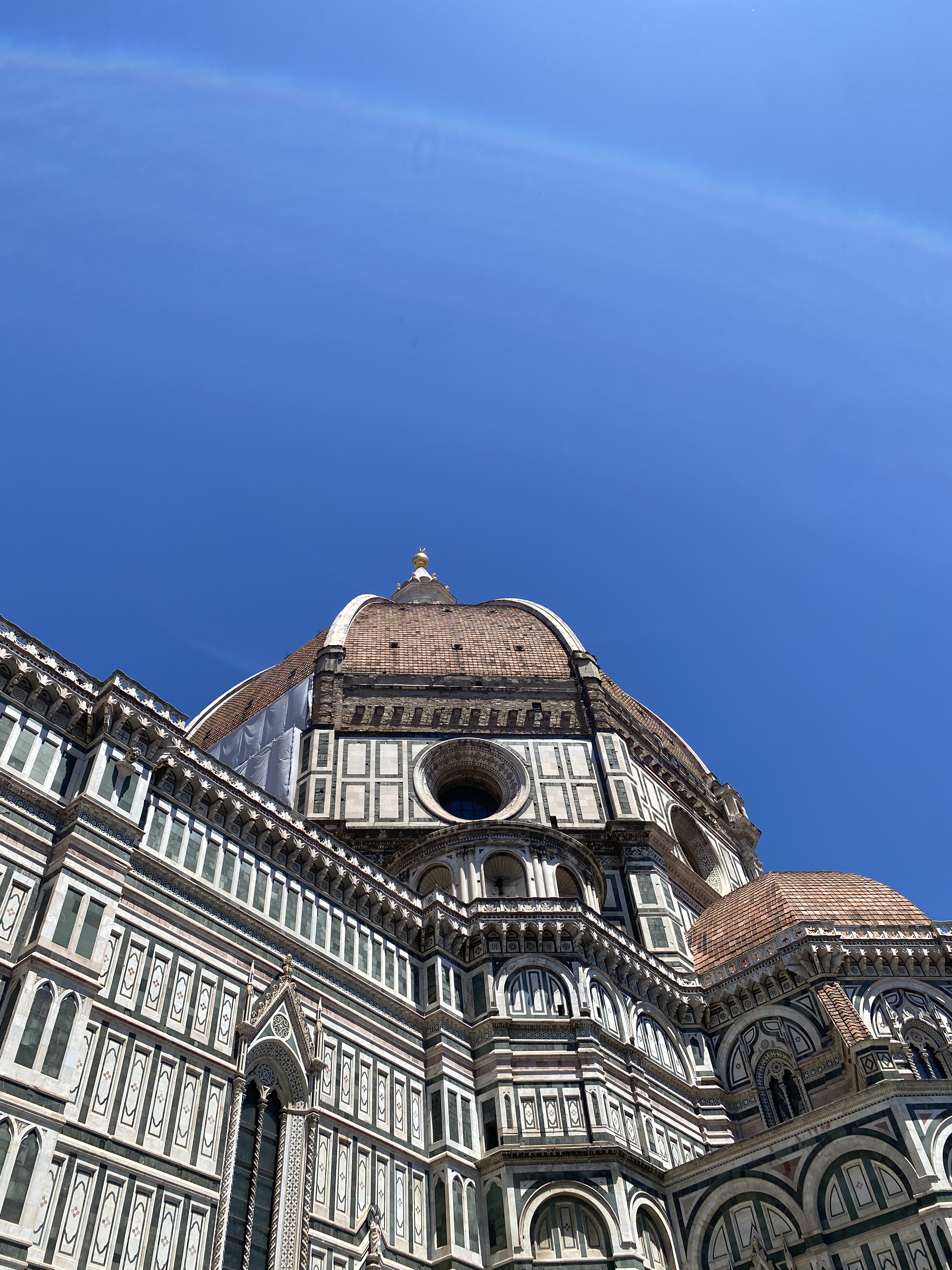
With our stomachs filled, it was time to head over to the star of the (tourist) show: Cathedral Santa Maria del Fiore. Piazza del Duomo was just about as crowded as Piazza San Marco was, though it would be erroneous to say that they share any other feature. Piazza del Duomo was striking with its green accents and flurry of artists selling their artwork while painting or illustrating live on the sidewalks, speaking volumes about how much art is appreciated in Firenze. Though we did not manage to secure tickets to the cathedral, one could still marvel at the symbol of Renaissance ingenuity from the outside. It’s sad to say that we did not linger long in the Piazza as there was much construction going on and the sun insisted on a glaring contest.



Before we knew it, we were due for another gelato, this time at Sbrino’s. Greedily, I went for a cone, which was a terrible choice in the thirty-seven-degree heat. The moment I stepped outside, I was racing against the clock to slurp up my gelato before it hit the floor in a sloppy mess. It is with great pride that I say I won the race, even if it was at the cost of a brain freeze. Once cooled down, we continued strolling along the roads, hoping to happen across something worthwhile. Wine windows were littered over the city alongside quaint jewelry shops and perfumeries, all of which we sampled as much as we could handle. Our afternoon wandering led to a second thought: Firenze felt more like a painting of a quiet town than a city—that is if you look at it while muting out the sounds. It is like only vibrant colors were thrust upon the artist’s palette and the request was for them to paint “if people lived like tomorrow does not exist, like money does not exist, and that the concept of hate and indifference was never introduced to mankind.” Create, Firenze, create.
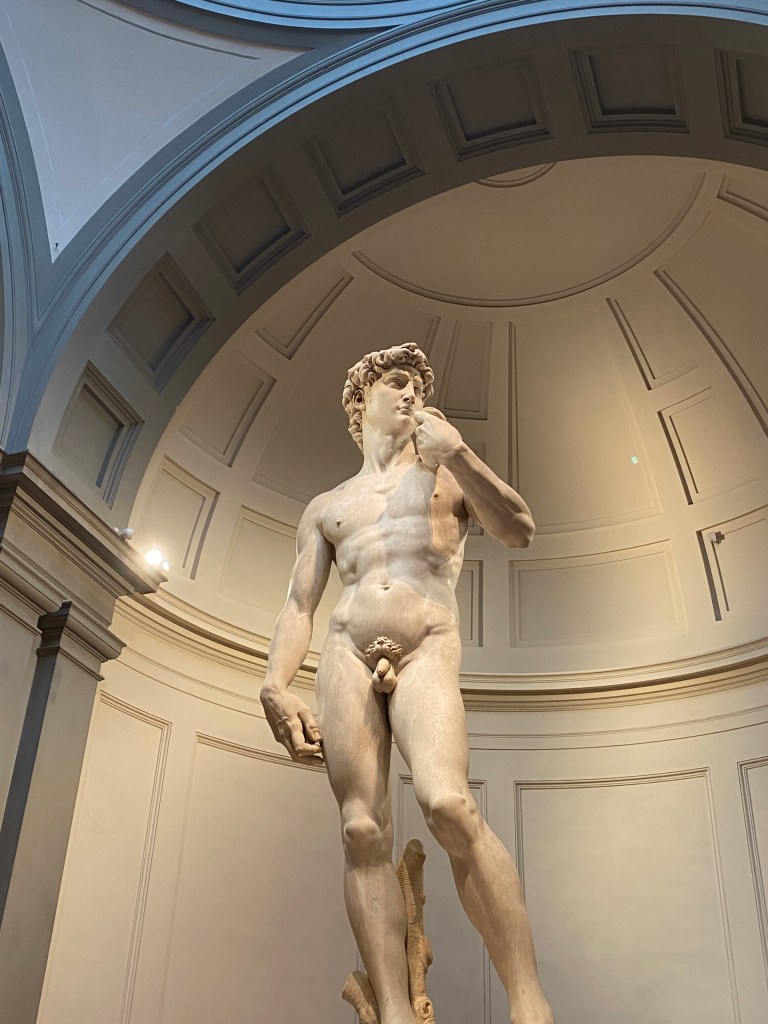
The grand finale of our second day took place at Galleria dell’Accademia, the star of which was Michelangelo’s David, so you will forgive me for not sparing much attention to the rest of the sculptures and paintings in the Galleria. As if traveling by air was not enough effort to see David, more work needed to be done. When you finally enter David’s hall of residence, he is situated at the far end, bathed in the last strands of day from the skylight above, daring you to come up to him. And so you make your way through the crowds, paying no mind to the paintings that line the walls towards David. Towering at seventeen feet, he exuded more power and control than any other person in the space, yet it was how at peace he looked that captivated me. David was only perfect if you looked at him through camera lenses; when you put your devices down and look—and I mean really look—with the naked eye, you will see that it is not David who is perfect but Michelangelo. How does one attribute muscle tension and a determined gaze to what was once marble? If David himself were perfect, he would not look real; but Michelangelo and all his perfection in craft brought David into reality. Ashamed, really, was how I felt leaving the galleria; to know that there are greats capable of such feat and that I will only ever witness their feats but never emulate their capabilities.

Our last day in Firenze wrapped quite aptly with a pasta-making class where we made fettuccine and cappellacci from scratch and got to taste the fruits of our labor at the very end. I will not attempt to draw some philosophical revelation from this culinary class because there wasn’t any. The class was filled with warmth, laughter, and fun, and I got carried away kneading the dough and creating little hats out of pasta. Not everything in life has a deeper meaning and we are allowed to do what we deem as fun once in a while. Ever since I returned from my trip, I have attempted to make fresh pasta once and it was a resounding success. Hopefully, this sticks as muscle memory for a while—both the technique and how to have fun.
roma
Most big cities have a penchant for being unseemly and even downright nasty. One does not have to look further than London and New York as examples. I assure you, gently, that Roma is not guilty of the same crime. The explanation for this I found quite simple: Most big cities have grown to house the contemporary working culture what with their high-speed metros and soaring skyscrapers, whereas Roma continues to provide a breathing space for history. Yet, Roma in all its glory did not feel like the capital of Italy very much. It was, for the most part, calm outside its tourist attractions, like the roads were paved and history was laid to rest.
I wish I could recount my time in Roma as vividly as I have Venezia and Firenze, but you will have to accept my apology instead. My singular regret is not being able to appreciate Roma and all it offered due to an untimely bout of illness that had me bedbound for most of my time there, likely due to the change in climate. How ironic that the one thing I came for would be my downfall?

As luck would have it, I managed to see the Roman Forum and the Colosseum before I fell too ill to move. There was a sense of stillness that came with those two locations, as if every step I took was being observed by those who walked these paths years and years before me. A part of it all felt sacred, but I was also defiant to think it is because you walked these roads that I am here today.
The Colosseum stood unyielding in its grandeur and I cursed the history books for never having done it justice. Time ceased within the colossal amphitheater, and I was convinced that if you put your ear onto its weathered stone facade, you might just hear echoes of gladiatorial combats and roars of crowds from centuries past. Here was the home to spectacles that lured the hearts of thousands—a monument, sure, but also a portal into the past and a reminder of how far we have advanced from chariots, spears, and shields.
While there, it was impossible to make oneself scarce from the multitude of photos being taken around the elliptical, yet my friends tried. I felt the urge to say, You are in the background of someone else’s travel photo; they could keep it in their phone, print it for framing, or stick it in an album. Isn’t it beautiful that the proof of your existence persists even if you do not intend for it to?
The Roman Forum, if you squinted and refused to take in too much detail, appears as a garden flanked by crumbling vestiges. It was vast and open as if to show any extra-terrestrial visitors our history like an unbandaged wound. Upon proper observation, however, the term ‘outdoor museum’ is perhaps a more fitting description. The Roman Forum was a mosaic of ruins; from the columns of the Temple of Saturn, the unwavering Arch of Titus, and the remains of the Senate House, each block and stone stores the Roman spirit, hungry to tell you about the triumphs and trials of Roma. I wish so badly to say there is nothing quite like standing in the middle of it all and feeling disposable, but I have not yet seen enough of the world to arrive at such a bold conclusion.


The rest of our time in Roma was spent touring leather shops, sampling food and beverages, and playing hide and seek with the sun. Oh! But how could I forget the Fountain? The Trevi Fountain at two in the afternoon was less packed than I had anticipated. Swiftly, my friend fished out some coins and handed one to each of us. With my back against the fountain and my eyes shut earnestly, I breathed a wish into the coin and tossed it over my left shoulder.
As the coin dipped below the water and landed with thousands of others, our trip came to a Limoncello-y end—sweet, vibrant, and rudely awakening. Where stories from years ago whisper down pavements and ruins, I found great pleasure in sharing gossip with my friends over yet another round of pasta and clinking of glasses filled with Limoncello—not our last, to be sure.
When I boarded my flight at Roma Ciampino, the sun gave me a final kiss goodbye. Only it didn’t quite feel like arrivederci, but a see you later.
And you will, Italy, if the coin I tossed into the Trevi holds any alchemy.
 Allison's Archives
Leave a comment